THE SHORT ANSWER
Look for a room-by-room description of the repairs, measurable quantities, material and finish details, allowances, exclusions, responsibilities and a process for changes. The total makes sense only when you understand the work behind it.
Start with the rooms, then the layers
Walk through the estimate in the same order you would walk through your home. Find each affected room. Under it, look for the work below the visible finish as well as the work you will see when the job is done.
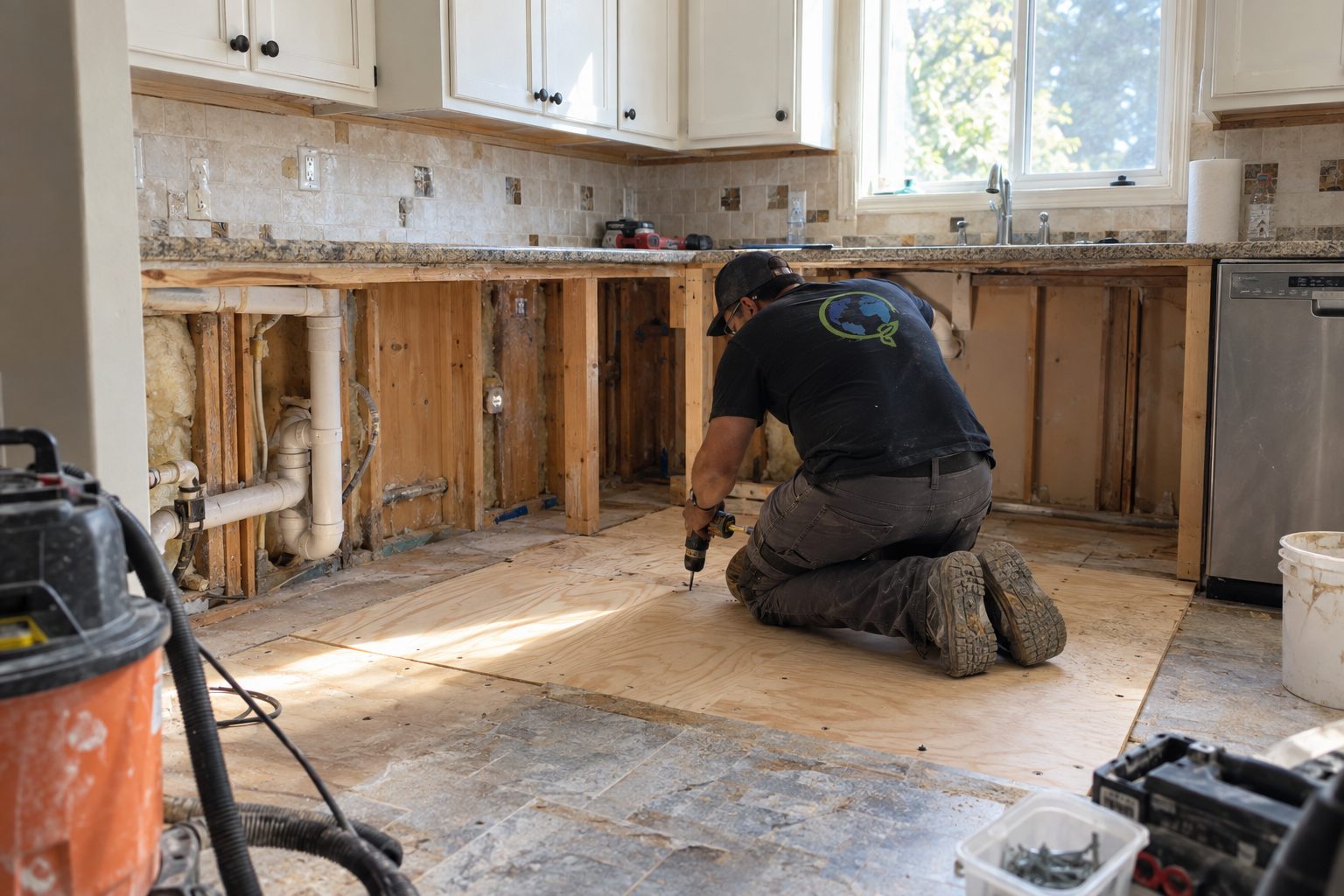
For a kitchen, that might mean a subfloor repair, wall insulation, drywall, texture, paint, baseboards and cabinet work. It may also involve trades that need to return before those surfaces are closed. Your project may need fewer or more items. The point is to make the boundaries visible.
Ask the estimator to show you where those items appear. If one contractor includes countertop removal and reinstallation and another does not, their totals are describing different jobs.
Turn a vague line item into a question you can answer
A useful answer should point to a location, quantity, material or clear responsibility. It should not depend on remembering a conversation three weeks later.
| If the estimate says… | Ask this |
|---|---|
| Drywall repair | Which walls, what area, and does the price include insulation, texture, primer and paint? |
| Replace flooring | Does this include removal, substrate preparation, the specified finish, transitions and trim? |
| Cabinet repair | Which boxes, doors or panels are being kept, repaired or replaced? |
| Paint to match | What surfaces will be painted, and how will the boundary with existing paint be handled? |
| Plumbing or electrical | Which disconnects, repairs, reconnections and inspections are included? |
| Site protection | What is protected, who moves contents, and what cleanup is included? |
Separate a fixed selection from an allowance
An allowance leaves room for a choice you have not made yet. That can be practical, but ask what the allowance covers. A flooring allowance might refer only to material, while removal, installation or preparation appears elsewhere. Ask how tax, delivery, waste and the difference between your selection and the allowance will be handled.
If you already know the product you want, share its name and model. If you are still choosing, ask when the selection is needed and who checks availability. Keep the selection in writing so the crew is working from the same information as you.
For an upgrade, request a separate price difference. That makes the original repair and your optional change easier to review.
Ask what happens when more damage is found
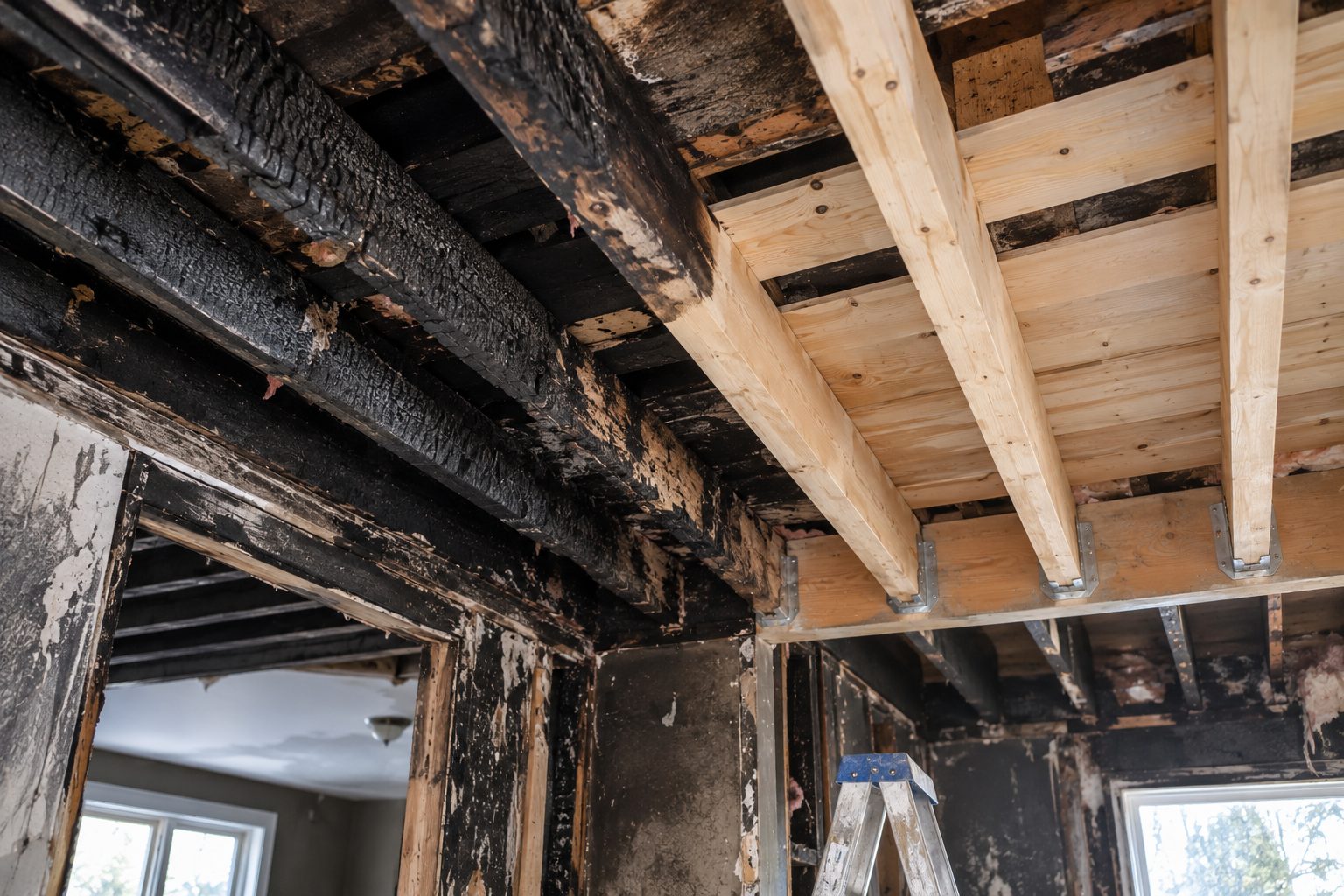
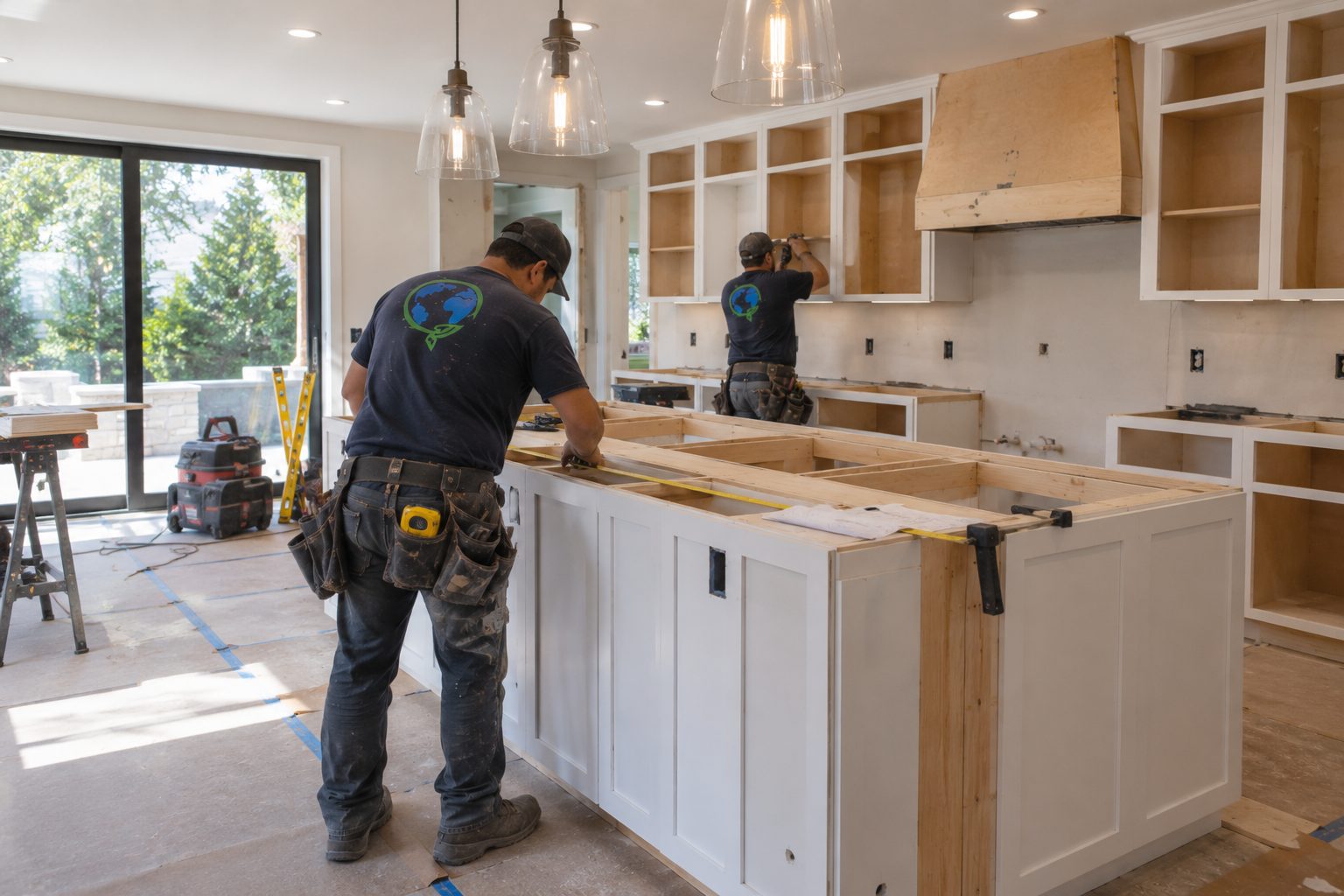
Openings made during reconstruction can reveal work that was not visible at the first visit. The important question is how that discovery is handled.
Ask who documents the condition, who prepares the revised price, and when you approve the change. If it affects the schedule, the revised dates should be discussed at the same time. Avoid a process that relies on a series of informal approvals while the invoice catches up later.
California's CSLB describes a written home improvement contract as including the work, materials, price and payment arrangements, with written change orders for changes. Read the contract itself, not only the estimate summary.
Further reading: CSLB: What belongs in a home improvement contract
An insurance estimate and a contractor's scope may differ
If you have an adjuster estimate, give the contractor a copy and ask for a comparison of the work described. A discrepancy may involve a quantity, an omitted task, a product assumption or an area the adjuster could not see.
Keep two questions separate: what the property needs and what your policy will pay. Ask your insurer or authorized representative to explain coverage, deductibles and any claim requirements. A reconstruction estimate is not an insurance coverage decision.
Bring questions to the walkthrough rather than treating a different total as proof that either document is complete. Green Planet can provide repair documentation for the insurer; the claim remains between you and your insurer.
Use the same checklist for every bid
Do not choose on detail alone. Ask the contractor to explain the scope in plain language, and verify the contractor's license before signing. CSLB's homeowner checklist is a useful companion to that review.
- Do all estimates cover the same affected rooms and the same finish boundaries?
- Are permits, inspections, source repairs and specialist work included or assigned elsewhere?
- Are the product selections specific enough to compare?
- Is each allowance explained, including what happens when you choose a different product?
- Are exclusions, payment milestones and proposed dates written down?
- Is there a named contact for decisions and changes?
Further reading: CSLB: Homeowner contract checklist
Give the estimator enough context to be specific
A few current photos, the cleanup handoff and a short list of priorities can make the first conversation more productive. Mention that the only bathroom is affected, that you need to keep a kitchen appliance connected, or that an HOA controls working hours.
Request a Green Planet reconstruction estimate with those details. You will have a starting point for discussing the proposed repairs, the finishing choices and the questions that still need an onsite answer.
GREEN PLANET / THE WORK UP CLOSE
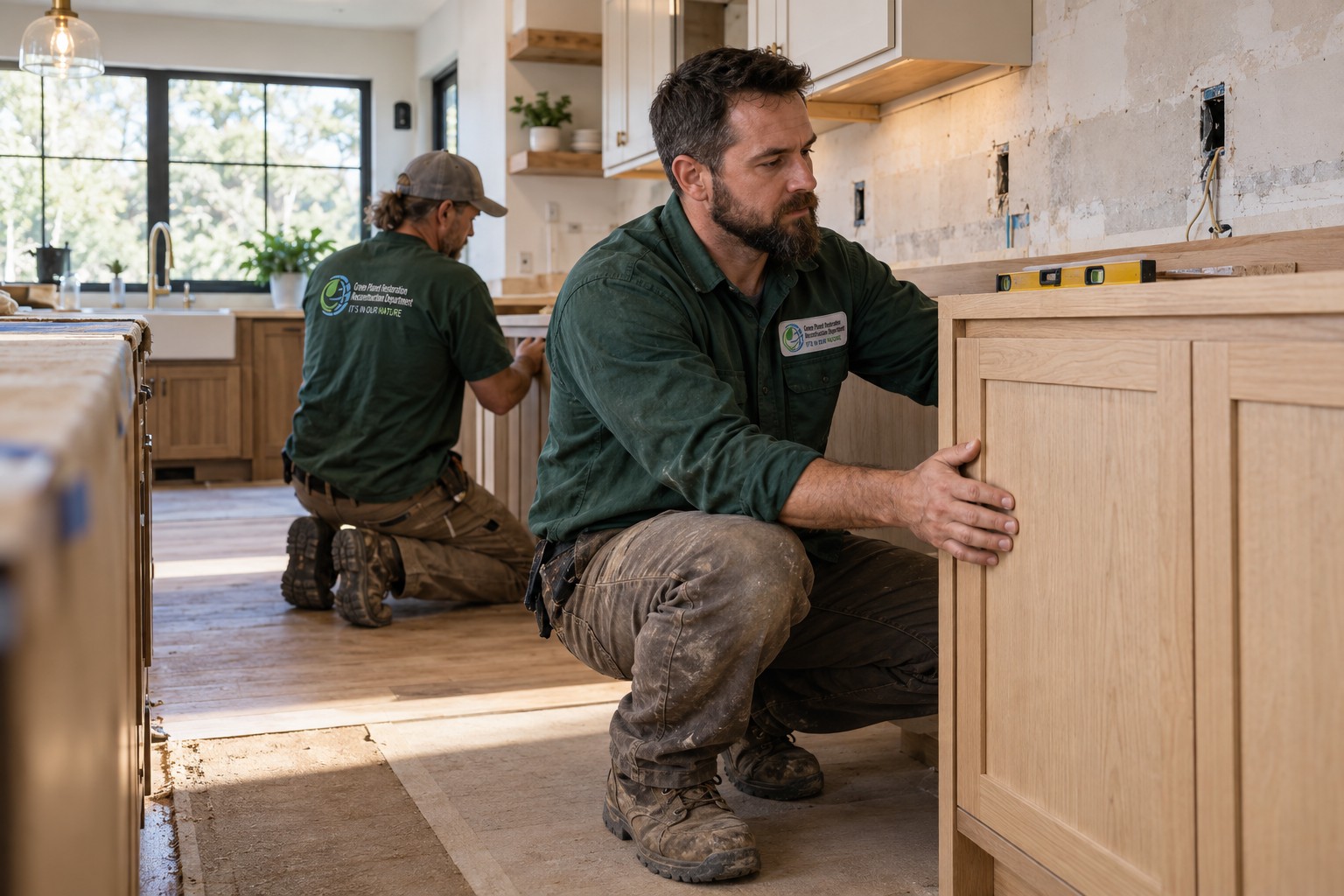
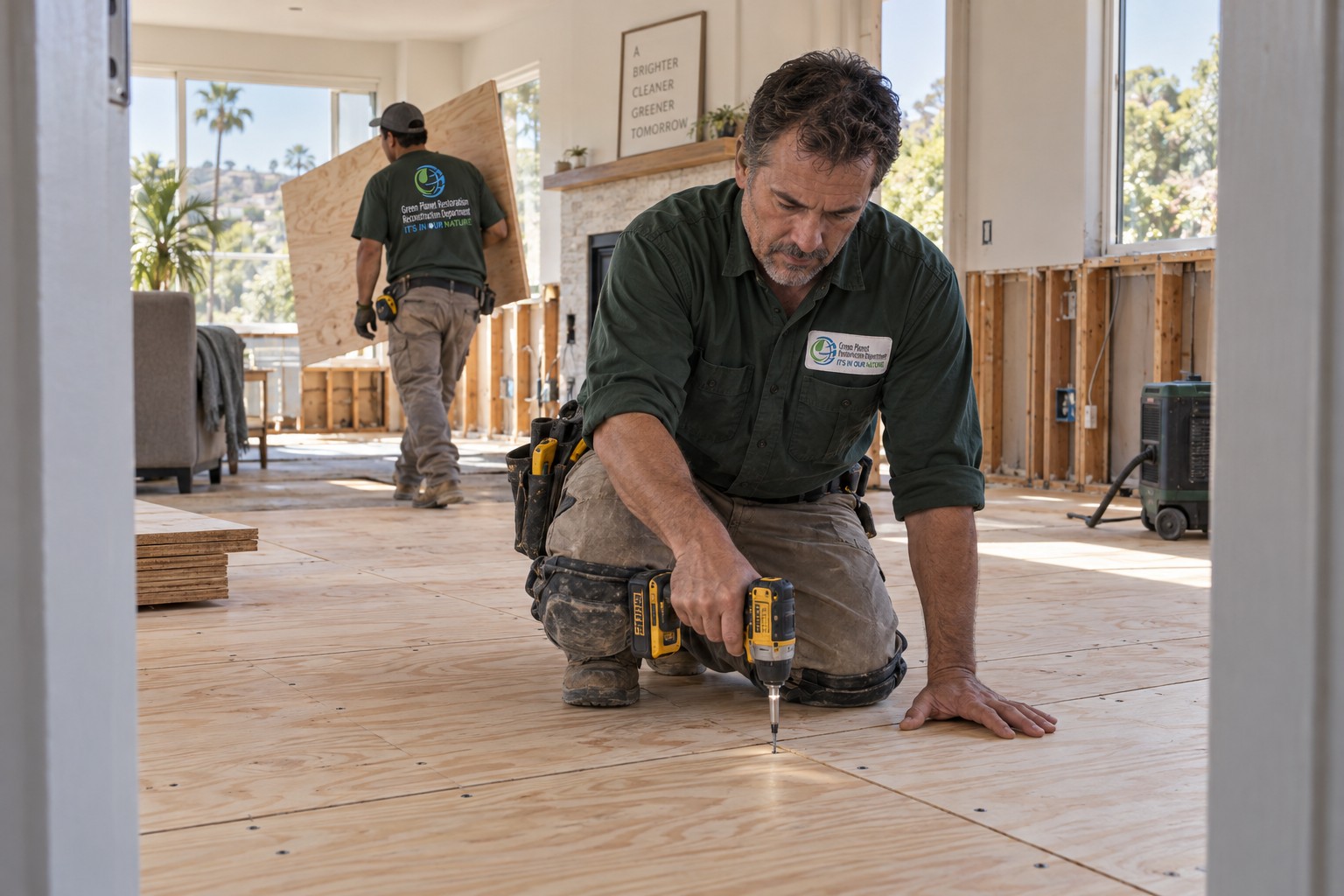
A closer look at the rebuild.
BEFORE YOU MOVE FORWARD
Common questions
Should every estimate have the same number of line items?
No. Contractors organize estimates differently. Compare the actual work and responsibilities, and ask for clarification wherever one estimate leaves something implicit.
Does a lower price mean something is missing?
Not necessarily. Compare quantities, products, allowances and exclusions before drawing that conclusion. A lower price for the same defined work is different from a lower price for fewer repairs.
Can I change the finishes during reconstruction?
Discuss the change before the affected material is ordered or installed. Ask for the price and schedule effect in writing, including any return or restocking conditions.
TAKE THIS TO YOUR NEXT CONVERSATION
Compare the repair plan first. Compare the total once the plans describe the same work.
Images illustrate reconstruction work and building conditions; they are not before-and-after records of a specific property.