THE SHORT ANSWER
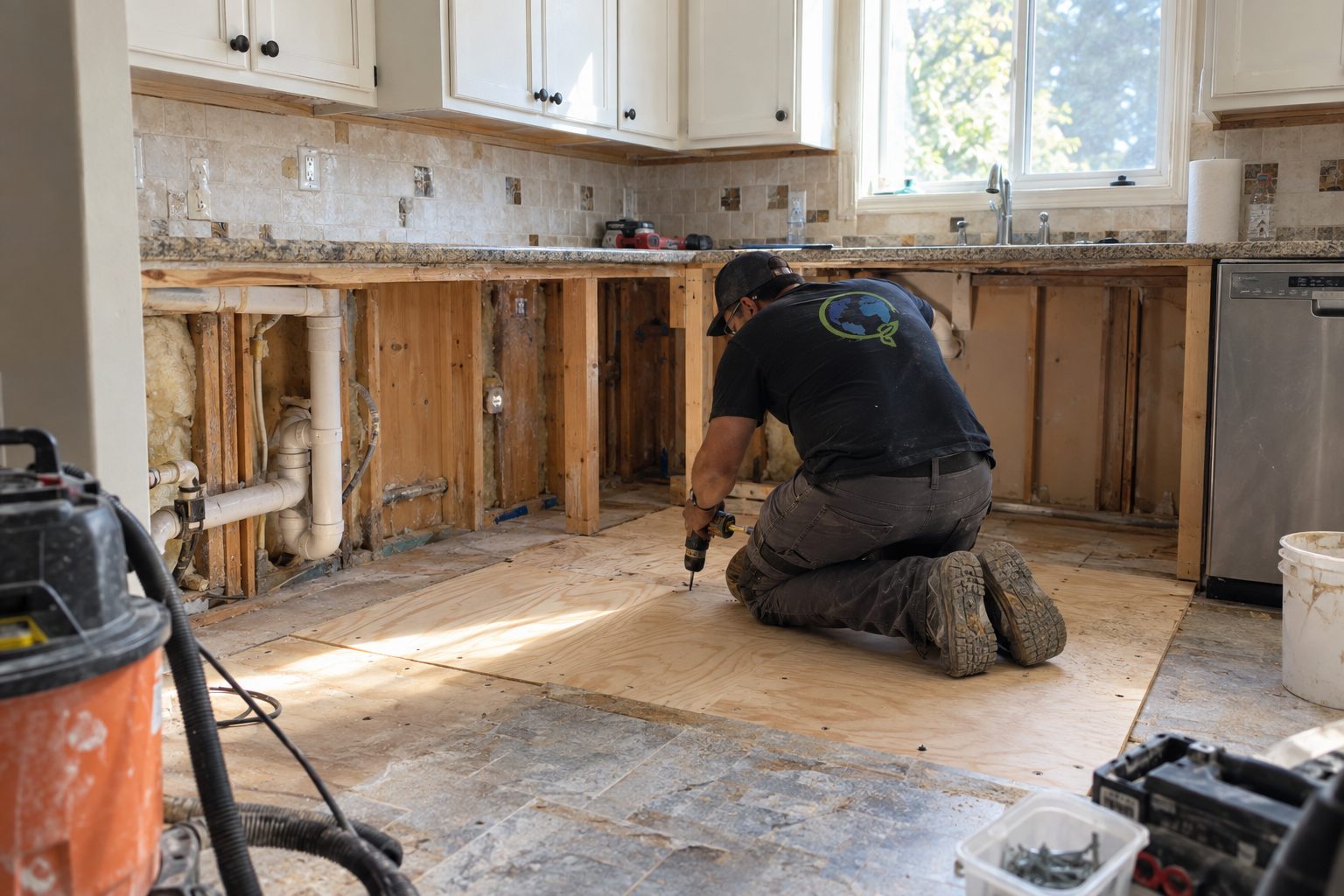
Plan the rebuild around the moisture problem that caused the damage. Ask for location-appropriate materials, complete waterproofing details where needed, effective ventilation and access to items that may need service. No finish can compensate for an unresolved leak.
Begin with where the water actually came from
Ask the team to describe the original problem in a sentence: a supply connection leaked, water escaped from a shower assembly, rain entered at a window, or moisture repeatedly collected on a surface. If the explanation is still vague, ask what remains to be investigated.
Then connect that cause to a repair. Replacing a cabinet damaged by a supply leak and rebuilding a shower that leaks into a wall are not interchangeable scopes. The visible damage may look similar; the work that addresses the cause can be quite different.
Put the source repair and the finish repair on the same planning sheet, even when different contractors perform them. That makes it easier to see whether an important task has fallen between the two.
In a shower, ask about the complete assembly
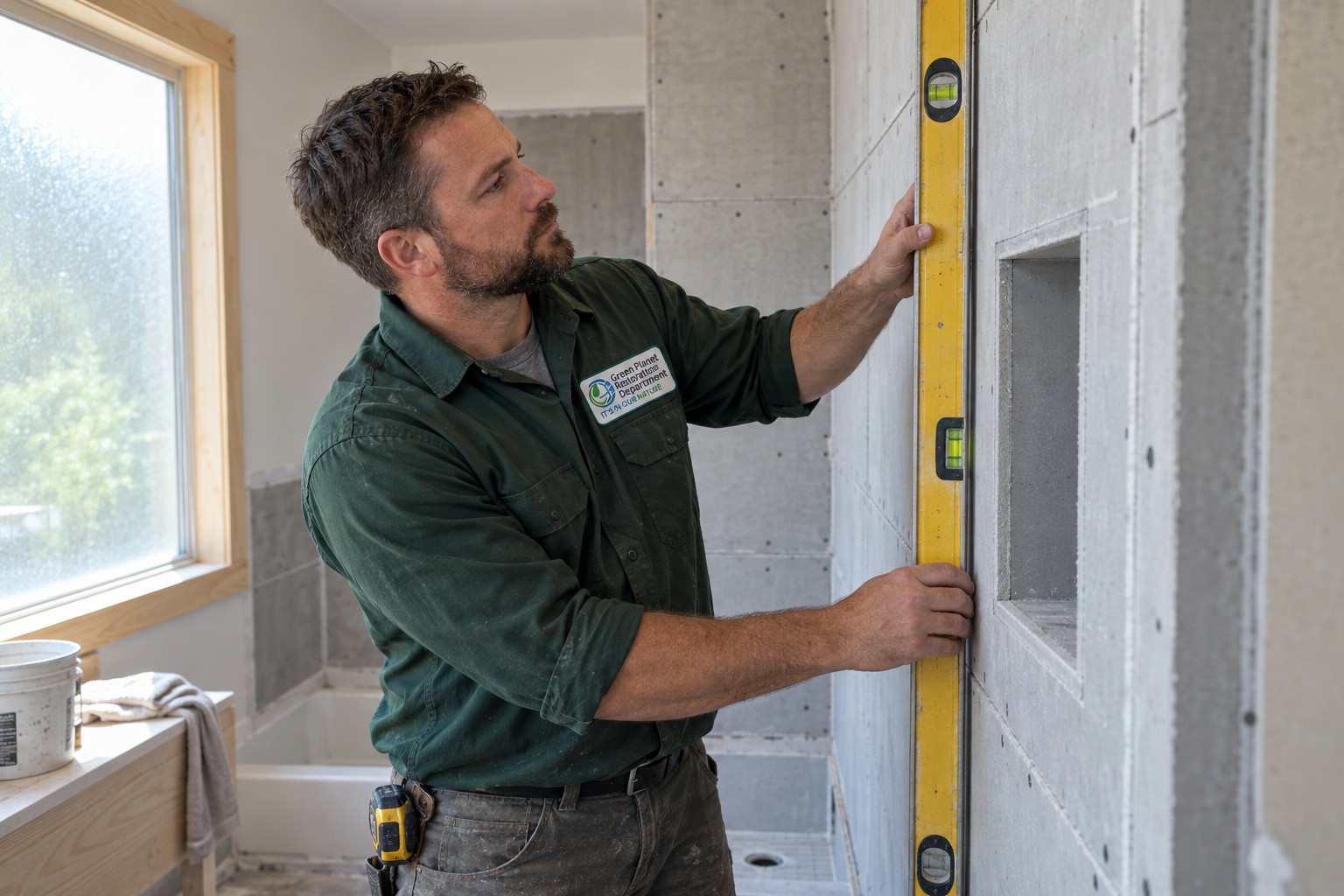
Ask the contractor to identify the proposed waterproofing system, the surfaces it covers and how it connects at corners, penetrations and the drain. The tile selection alone does not describe those details.
Manufacturer guidance from Schluter illustrates why shower walls, bases and connections need to be considered together. The appropriate system for your project may be different, but it should still have a coherent specification and be installed according to its requirements.
Ask which inspections or tests apply before the tile covers the work. Request photos of the completed concealed details and keep the product information. You do not need to supervise each application step to ask for a clear record of the system being installed.
Further reading: Schluter: Tiled shower waterproofing systems
Choose products by location, not by a reassuring label
Ask to see the exact product, not just a category such as 'water-resistant board.' Product limitations and installation requirements vary. Keep substitutions visible in the approval process so a change in one layer does not go unnoticed by the person installing the next.
For a cabinet, ask whether the scope covers the damaged box, adjacent panels, toe kicks and any countertop work needed to gain access. A new door alone may not describe the repair you are expecting.
| Location | A useful specification question |
|---|---|
| Inside a shower or tub surround | What complete assembly is specified for direct water exposure? |
| Bathroom walls outside the shower | Which wallboard and finish suit the expected conditions here? |
| Under a sink or beside an appliance | How will connections remain accessible, and what damaged material is being replaced? |
| Below the finished floor | What is the substrate condition, and what preparation does the selected finish require? |
| At old and new finishes | How will the repair meet the surfaces that remain? |
Treat bathroom ventilation as part of the room
Ask whether the existing exhaust arrangement is suitable and working, where it discharges and whether the proposed work changes it. EPA's Indoor AirPlus guidance describes bathroom exhaust vented directly outdoors as a way to remove moisture near its source.
You should leave the project knowing how to operate and maintain the installed equipment. Ask the installer to explain controls, any timer or humidity setting, and what needs periodic cleaning. If a fan is being retained, make its condition part of the conversation rather than assuming a grille in the ceiling answers the question.
For a kitchen, raise the same practical issue around the work being done: what equipment and connections remain, what is being moved and who checks the completed installation?
Further reading: EPA: Local ventilation and moisture control
Make future inspection and service possible
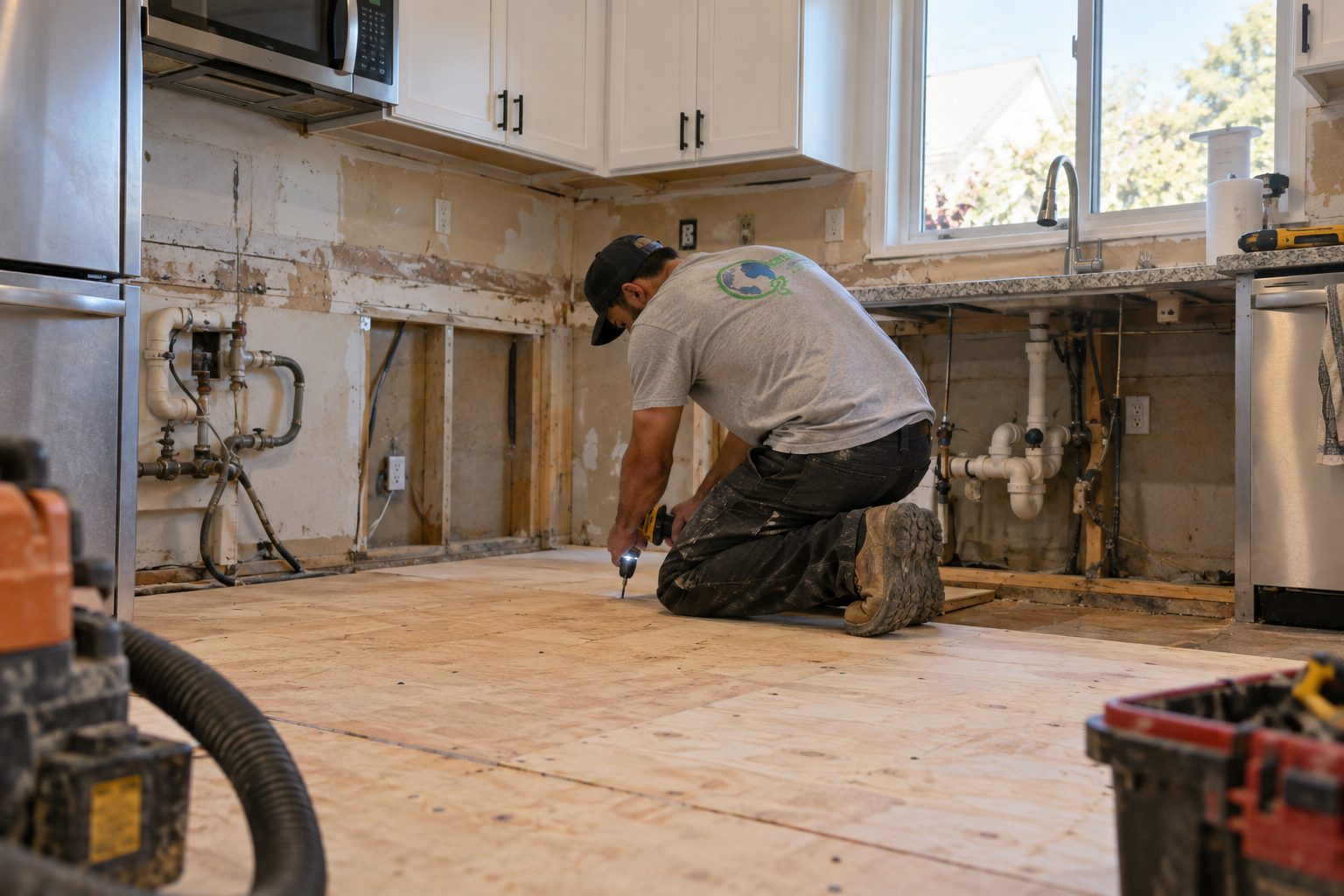
Ask how someone will reach the shutoff valves, appliance connections and any serviceable components after the new cabinets or panels are installed. The answer should fit the actual layout, including shelves, drawers and appliance clearances.
If you want a leak alarm or another monitoring device, discuss its location and maintenance needs with the appropriate installer. Treat it as an additional way to notice a problem, not a replacement for sound plumbing or waterproofing.
Take a few organized photos before the area closes. Label the room and the location. That record is more useful later than a phone full of unlabeled close-ups.
Know what to watch after the room is back in use
EPA advises keeping indoor humidity below 60 percent where possible, ideally around 30 to 50 percent, and responding to visible condensation or leaks. It also recommends bathroom ventilation during showering. These are operating conditions to pay attention to, not a guarantee that a particular room cannot develop a problem.
At handover, ask what normal maintenance the installed products need. Keep care instructions and the contact details for reporting a concern. If you notice a recurring odor, staining or a damp area, document it and raise it promptly rather than waiting for the next planned renovation.
Further reading: EPA: Mold, moisture and your home
Resolve the hidden details before choosing the final look
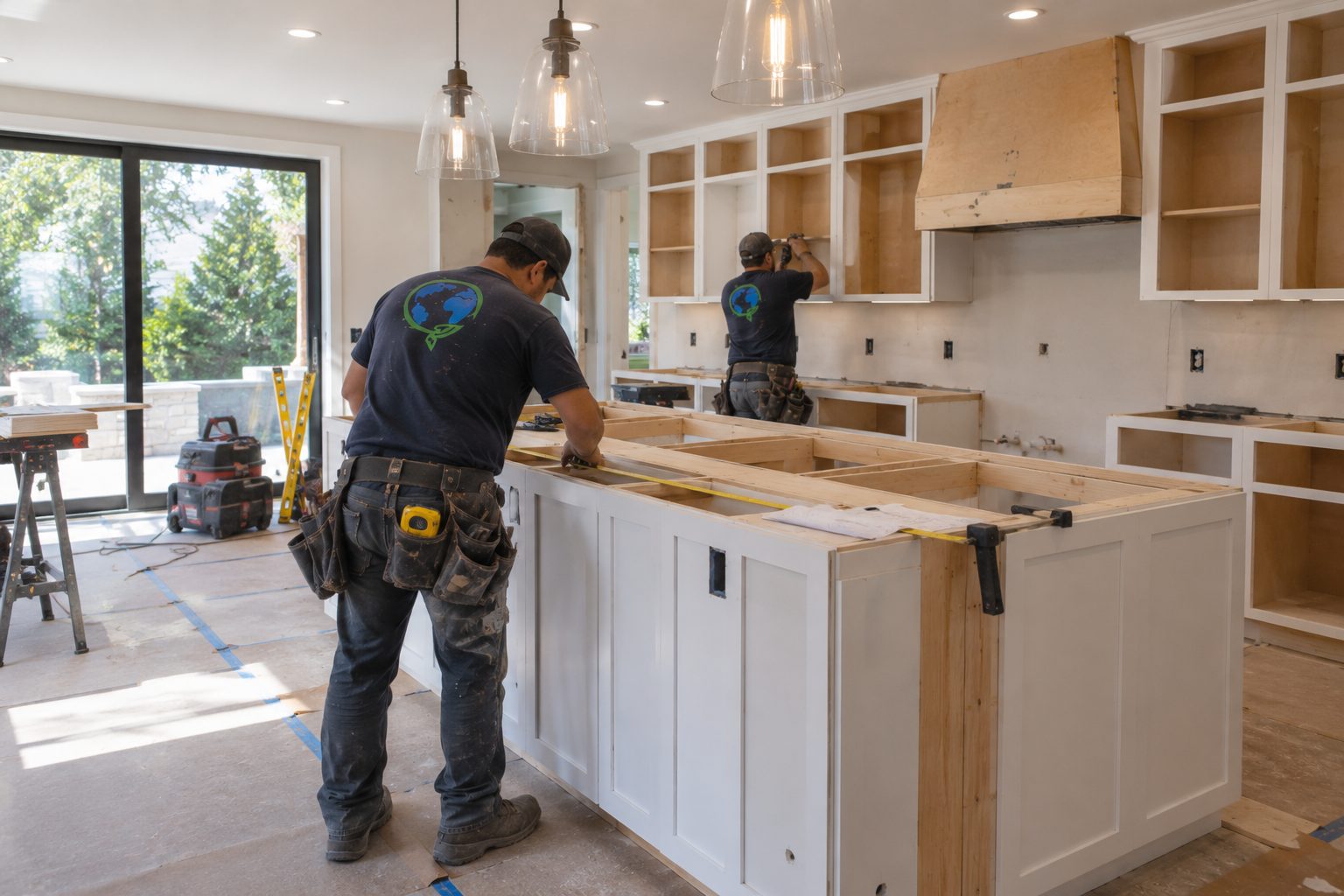
There is nothing wrong with starting a mood board while the room is open. Just make sure the conversations about assemblies, ventilation and access happen before those choices become orders.
When you request a Green Planet reconstruction estimate, tell us which parts of the kitchen or bathroom were removed and what was done to address the moisture. We can discuss a repair scope that includes the finishing details and identifies the questions that need to be resolved before construction.
GREEN PLANET / THE WORK UP CLOSE
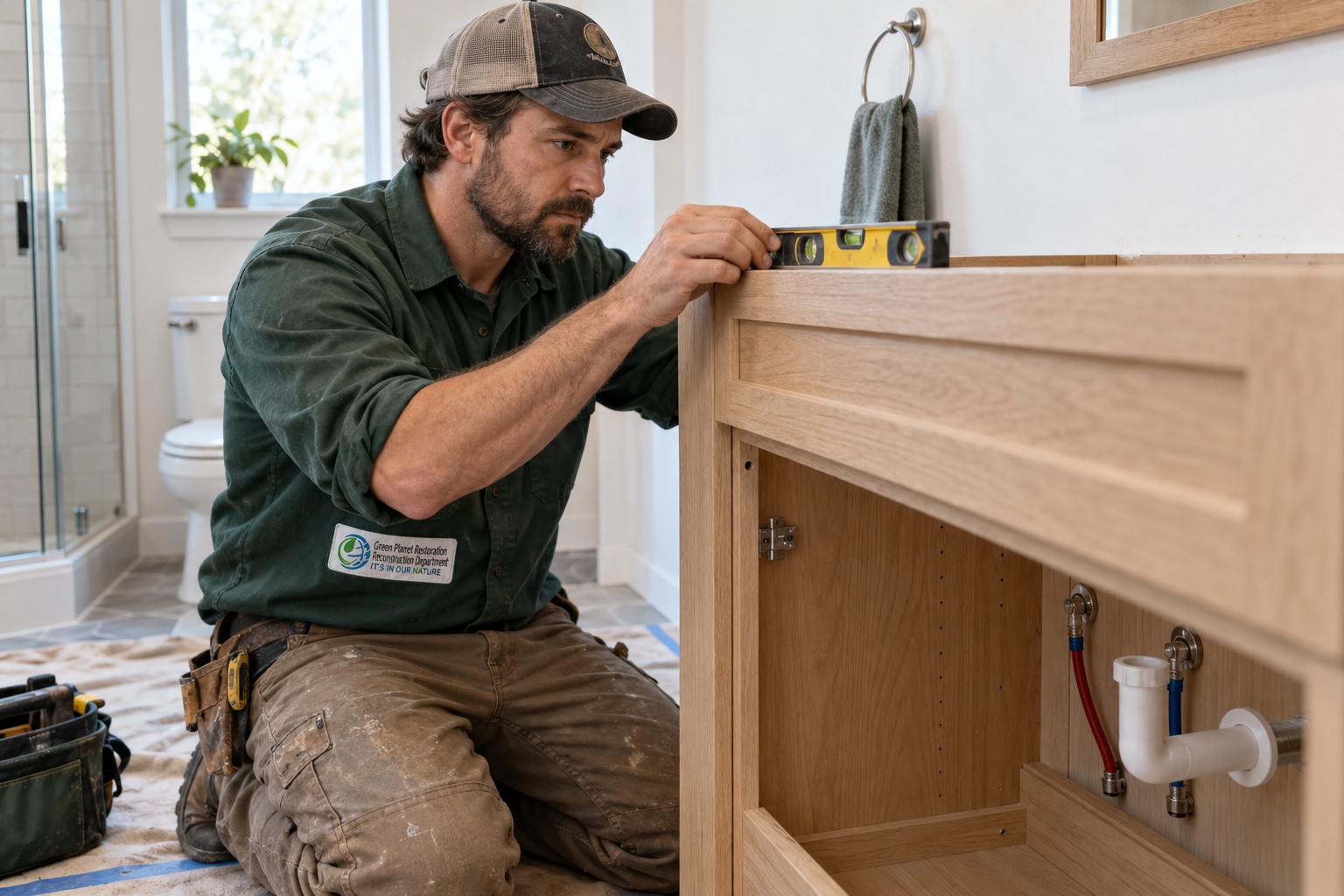
A closer look at the rebuild.
BEFORE YOU MOVE FORWARD
Common questions
Should I replace everything in the kitchen or bathroom?
That depends on the condition of the materials and the work required to restore the affected area. Ask for a location-by-location explanation of what is kept, repaired and replaced.
Does a new bathroom fan fix a hidden leak?
No. Ventilation and a leak repair address different conditions. Ask the team to identify the cause and the work required for that cause.
Can I upgrade the layout while the room is open?
Ask for the upgrade as a separate scope option. Moving fixtures or changing the layout can affect trades, approvals, ordering and schedule, so discuss those effects before approving it.
TAKE THIS TO YOUR NEXT CONVERSATION
The finishes should be the last layer of a considered repair, with the cause, assembly and service access already addressed.
Images illustrate reconstruction work and building conditions; they are not before-and-after records of a specific property.